by Glory Azubuike | Aug 7, 2026 | Journaling philosophy
A journal is not a place where your thoughts are placed on trial.
It is not there to criticise your emotions, measure your progress, or prove that you have everything figured out.
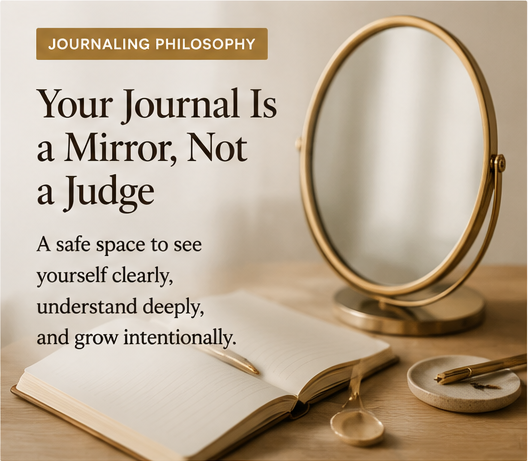
Your journal is a mirror.
It helps you see what is already present within you.
When you write honestly, you begin to notice recurring thoughts, emotional patterns, unspoken concerns, quiet hopes, and areas of growth that may otherwise remain hidden beneath activity.
The purpose of journaling is not to produce perfect writing.
It is to create awareness.
A mirror does not argue with what it reflects. It simply allows you to see more clearly. In the same way, journaling gives you an opportunity to observe your inner world without immediately judging what you find.
From that place of awareness, you can begin to understand.
And what you understand, you can address with greater intention.
Your journal is more than a space to record your thoughts. It is a space to examine them, recognise patterns, gain clarity, and better understand who you are becoming.
Reflection is not about condemning yourself.
It is about seeing yourself clearly enough to grow.

by Glory Azubuike | Aug 7, 2026 | Keep this in mind series
Keep this in mind:
Gratitude is not merely a response to dramatic blessings.
It is the awareness that allows us to recognise goodness in ordinary moments.
A grateful mind remembers.
It notices details. It pays attention. It slows down long enough to see what constant activity can easily conceal.
When we move through life carelessly, we may overlook the people, provisions, conversations, and quiet moments that are supporting us every day.
But when we learn to slow down, we begin to see differently.
We hear differently.
We think differently.
Gratitude gradually becomes less of a performance and more of a natural response to being fully present.
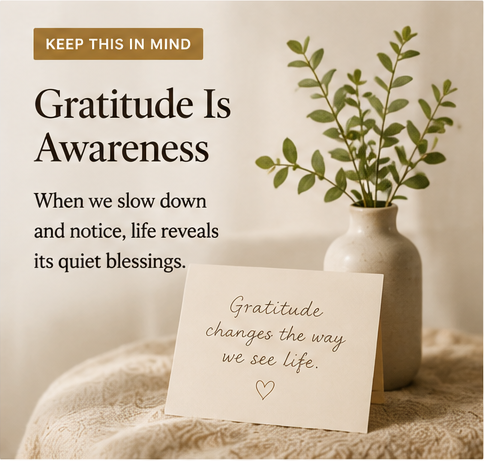
Gratitude begins with awareness.
And awareness begins when we choose to look again.
by Glory Azubuike | Aug 7, 2026 | Weekly quotes
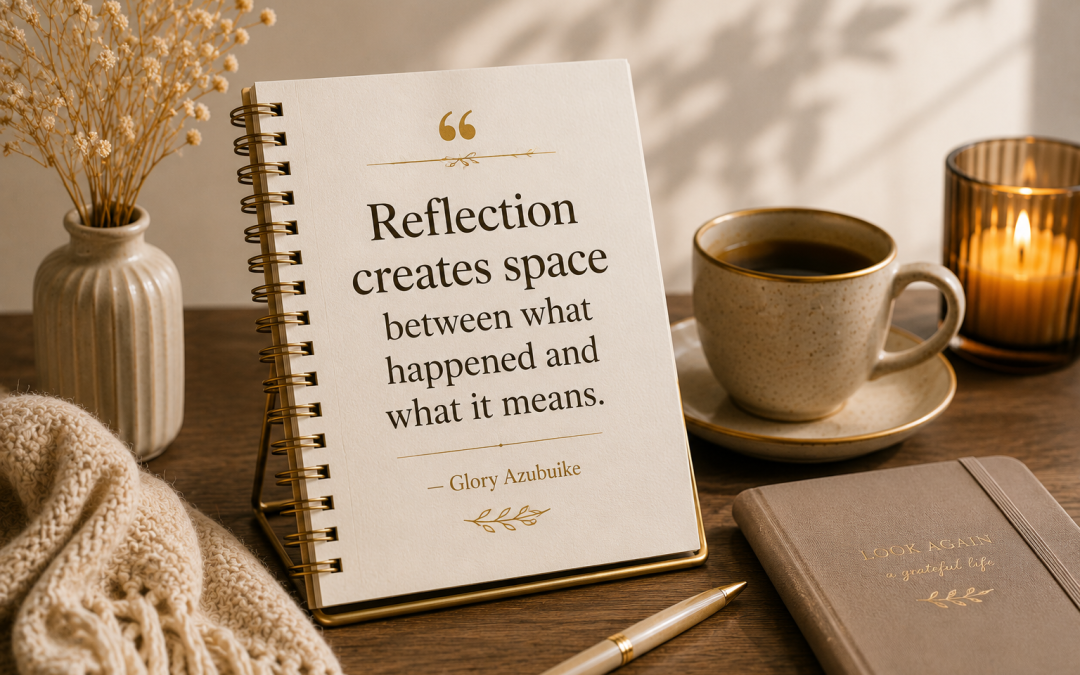
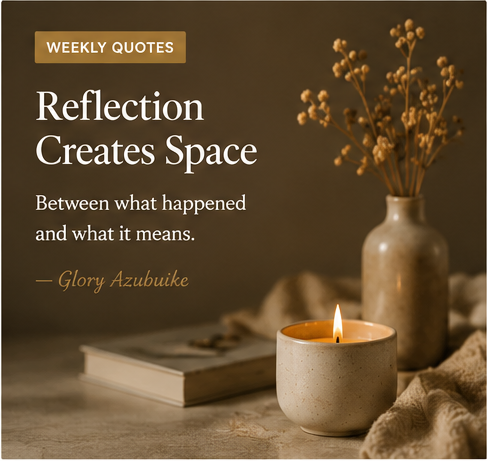
“Reflection creates space between what happened and what it means.”
— Glory Azubuike
Some experiences move so quickly that we respond before we fully understand them.
Reflection creates the space to return, observe, and ask better questions.
What happened?
How did it affect me?
What did it reveal?
What is this moment teaching me?
The event and its meaning are not always understood at the same time. Sometimes clarity arrives only after we have slowed down long enough to examine what the experience was forming within us.
Carry This Into Your Week
Do not rush to define every experience while you are still living through it.
Give understanding time to emerge.
by Glory Azubuike | Aug 7, 2026 | Intentional pauses
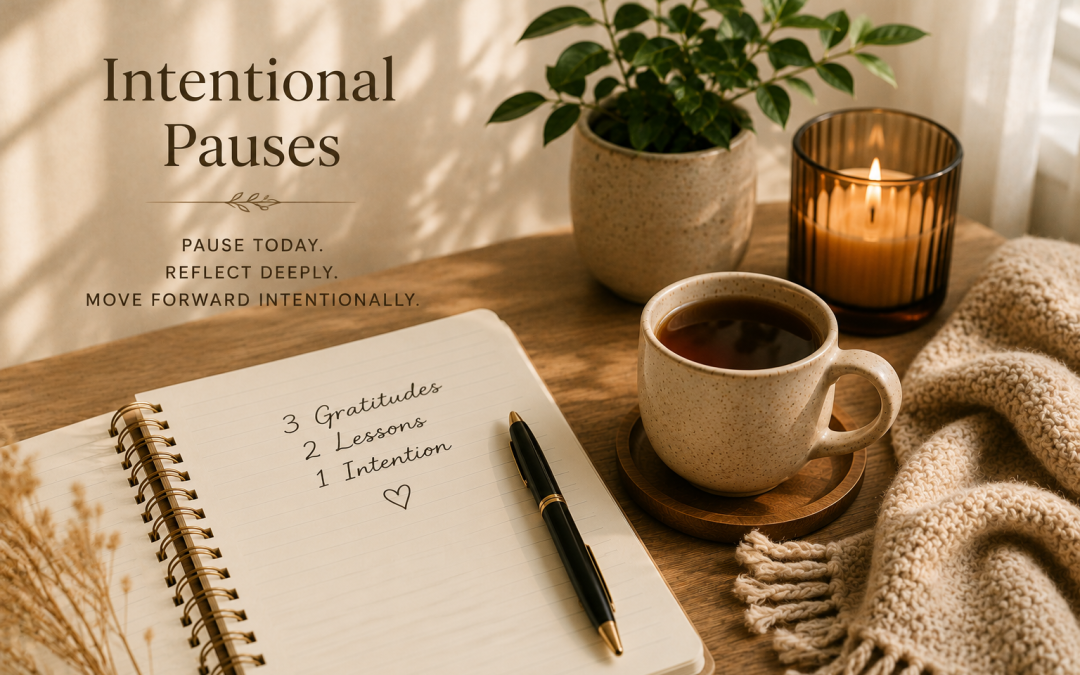
Before the weekend begins, take a moment to step back from the rush.
A pause is not laziness. It is not quitting, avoiding responsibility, or refusing to move forward.
A meaningful pause is intentional.
It creates space between constant activity and thoughtful response. It helps you recognise what the week has given you before you enter another one carrying everything forward without examination.
Think of a pause as applying the brake before a sharp turn. The brake does not stop the journey permanently. It helps you move through the next part of the road with greater awareness and direction.
Take your journal and use this simple 3-2-1 reflection rhythm:
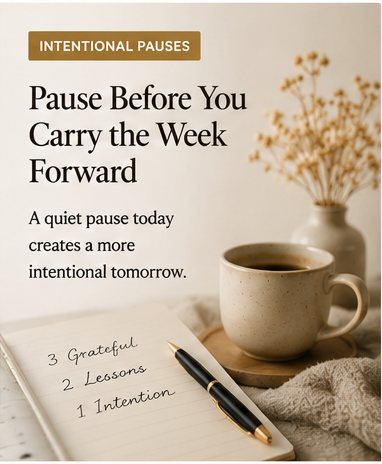
3 Things You Are Grateful For
What brought joy, support, provision, encouragement, or grace into your week?
2 Lessons or Insights
What did the week teach you about yourself, your relationships, your priorities, or your current season?
1 Intention for the Week Ahead
What do you want to carry forward with greater purpose?
Nothing complicated.
Just a quiet opportunity to notice your life more intentionally.
Pause. Reflect. Write.

by Glory Azubuike | Aug 7, 2026 | Thought notes
Thoughts often feel heavier when they remain unexamined.
Inside the mind, several thoughts may compete for attention at the same time. One question leads to another. A memory returns. An emotion rises without a clear name. Before long, the mind feels full, even when nothing dramatic has happened.
Writing changes the environment in which those thoughts exist.
When thoughts move from the mind to paper, they stop competing in the same way. They become visible. They can be separated, organised, questioned, and understood.

This is why journaling is not simply about recording what happened during the day.
It is a way of making clarity visible.
The page gives your thoughts somewhere to go. It allows you to notice patterns instead of continually living inside them. It helps you give language to feelings that may have been difficult to express.
Sometimes your thoughts are clearer on paper than they are in your head.
And sometimes the first step towards peace is simply giving those thoughts a place to rest.
